

Why are people being brought into the country via this method – ILLEGALY, by our own officials and WHY are they even coming HERE to England/UK; WHY are they not staying closer to their homelands, so that when their circumstances improve, they can return?!!!
Collating the ‘official’ figures – (imo – we could probably multiply the following numbers several times over in order to reach a more accurate figure)..

Menu Search GOV.UK
Accredited official statistics
Published 27 February 2025
Print this page
Back to ‘Immigration system statistics, year ending December 2024’ content page.
Data relates to 2024 and all comparisons are with 2023 (unless indicated otherwise).
Additional information is provided in the ‘About the statistics’ section and in the user guide.
Not all irregular arrivals will be detected and the proportion of arrivals detected will vary by method. Therefore, it is not advisable to directly compare recorded detections on different methods of entry. However, some broad trends can be observed.
In 2024, there were 43,630 detected irregular arrivals, 19% more than in 2023, and 84% of these arrived on small boats.
Small boats have been the predominant recorded entry method for irregular arrivals since 2020, when detections on this method increased rapidly and detections on other methods declined (likely in part due to the COVID-19 pandemic making other methods of entry, such as air or ferry, less viable). Small boat arrivals are also the most visible of the irregular methods of entry, so the most likely to be recorded, and have remained high even as other routes have become more viable again.
Small boat arrival numbers are subject to seasonal fluctuations due to changes in the weather, typically with peaks in warmer summer months when crossing conditions are more favourable. Comparisons of arrivals between the same months in different years may also be affected by differences in weather conditions. As a result, we do not advise making comparisons between shorter periods where arrival numbers may fluctuate considerably.
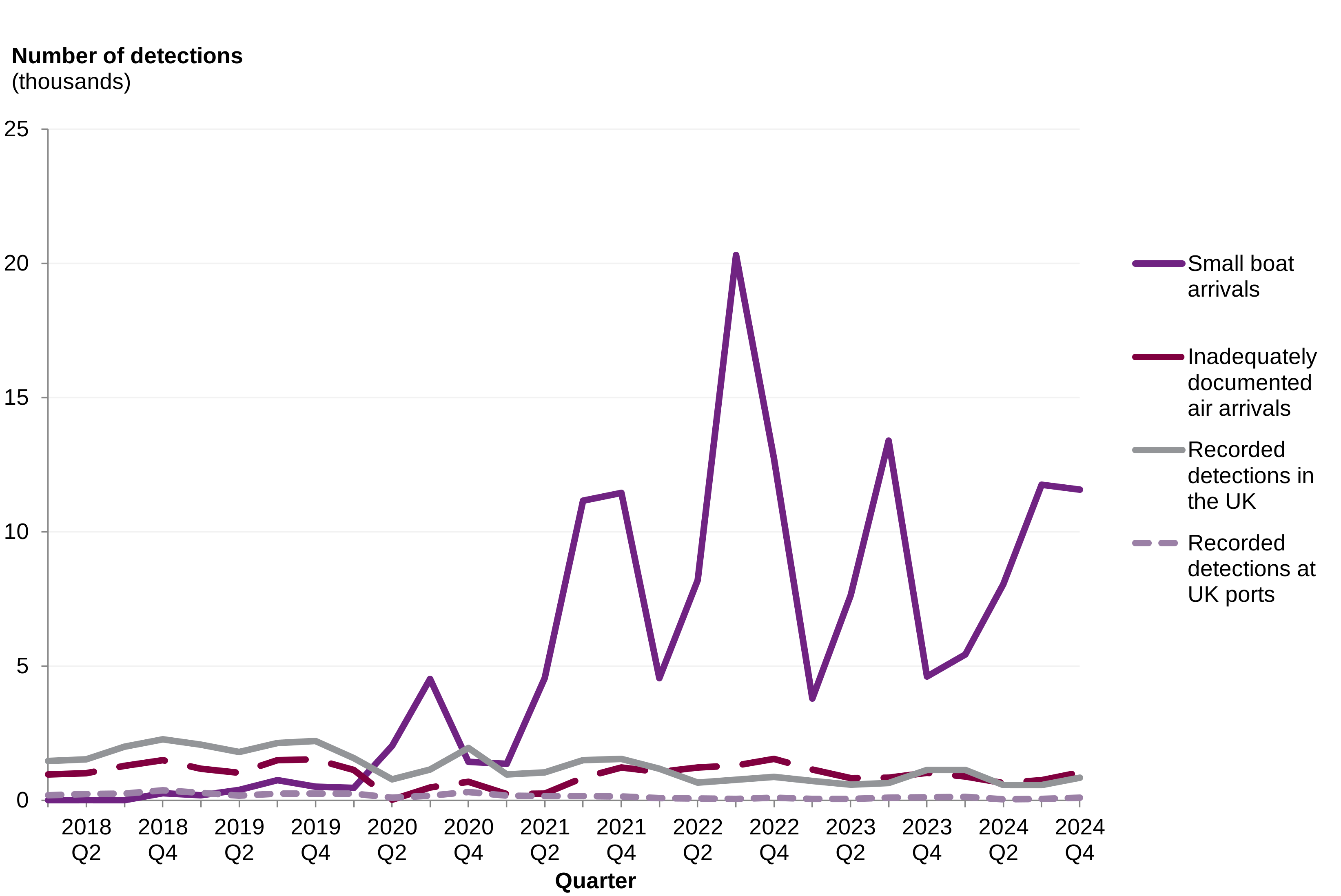
Other irregular arrivals comprised: inadequately documented air arrivals (8%), recorded detections in the UK within 72 hours of arrival (7%), and recorded detections at UK ports (1%).
The number of inadequately documented air arrivals has been between 3,300 and 5,300 each year since 2018, except for 2020 and 2021 when numbers were lower due to COVID-19 travel restrictions.
There were 3,138 recorded detections in the UK in 2024, around two-thirds (62%) lower than the recent peak of 8,239 in 2019. Similarly, the number of recorded detections at UK ports in 2024 (326) has decreased 69% since 2018 (1,052).
Figure 1: Detections of irregular arrivals to the UK, by method of entry, January 2018 to December 2024
Source: Irregular migration to the UK detailed dataset, year ending December 2024 – Irr_D01
Since January 2018, 70% of people detected arriving irregularly have been adult males aged 18 and over.
Since 2018, just under one-fifth (18%) of detected irregular arrivals have been children aged 17 and under.
Just under one-sixth (15%) of detected irregular arrivals in 2024 were Afghans, the nationality in the top 5 for all 4 entry methods.
Of the 6,339 Afghan irregular arrivals, 93% arrived on small boats (see section 2.3 for more detail on small boat arrivals by nationality).
Iranian, Eritrean, and Sudanese nationals were in the top 5 for multiple irregular methods of entry, with Iranians the most common nationality arriving inadequately documented by air (799 arrivals) and Sudanese nationals the most common nationality detected in the UK (719 detections). Albanians were the most common nationality detected at UK ports (64 detections); however, numbers were substantially lower than those arriving on small boats in 2022 (12,658 arrivals).
For most of the nationalities in Table 1, their most common irregular method of entry was on small boats, reflecting the size of that route (see section 2.3). However, for Sri Lankan and Georgian nationals, their most common irregular method of entry was by air.
Financial, social, physical and geographical factors may influence the method of entry individuals use and the types of individuals detected arriving. These factors may also change over time.
Table 1: Top 5 nationalities detected arriving for each irregular method of entry, in 20241,2
| Rank | Small boat arrivals (% of total) | Inadequately documented air arrivals (% of total) | Recorded detections in the UK (% of total) | Recorded detections at UK ports (% of total) |
|---|---|---|---|---|
| 1 | Afghanistan, 17% | Iran, 24% | Sudan, 23% | Albania, 20% |
| 2 | Syria, 13% | Sri Lanka, 11% | Eritrea, 16% | Sudan, 12% |
| 3 | Iran, 12% | Georgia, 10% | Iran, 13% | India, 12% |
| 4 | Vietnam, 10% | Stateless, 7% | Iraq, 11% | Afghanistan, 7% |
| 5 | Eritrea, 10% | Afghanistan, 7% | Afghanistan, 6% | Eritrea / Pakistan / Turkey, 6% (each) |
| Total | 35,359 | 3,350 | 3,138 | 326 |
Source: Irregular migration to the UK detailed dataset, year ending December 2024 – Irr_D01
Notes:
Statistics on small boats include individuals who were detected on arrival to the UK, detected in the Channel and subsequently brought to the UK, and those encountered in the UK who were suspected of having arrived on a small boat within the previous 72 hours. They do not include any people who arrived on larger vessels (such as a ferry), those who arrived in the UK undetected or those prevented from departing France or intercepted by French authorities and returned to France (see the ‘user guide’).
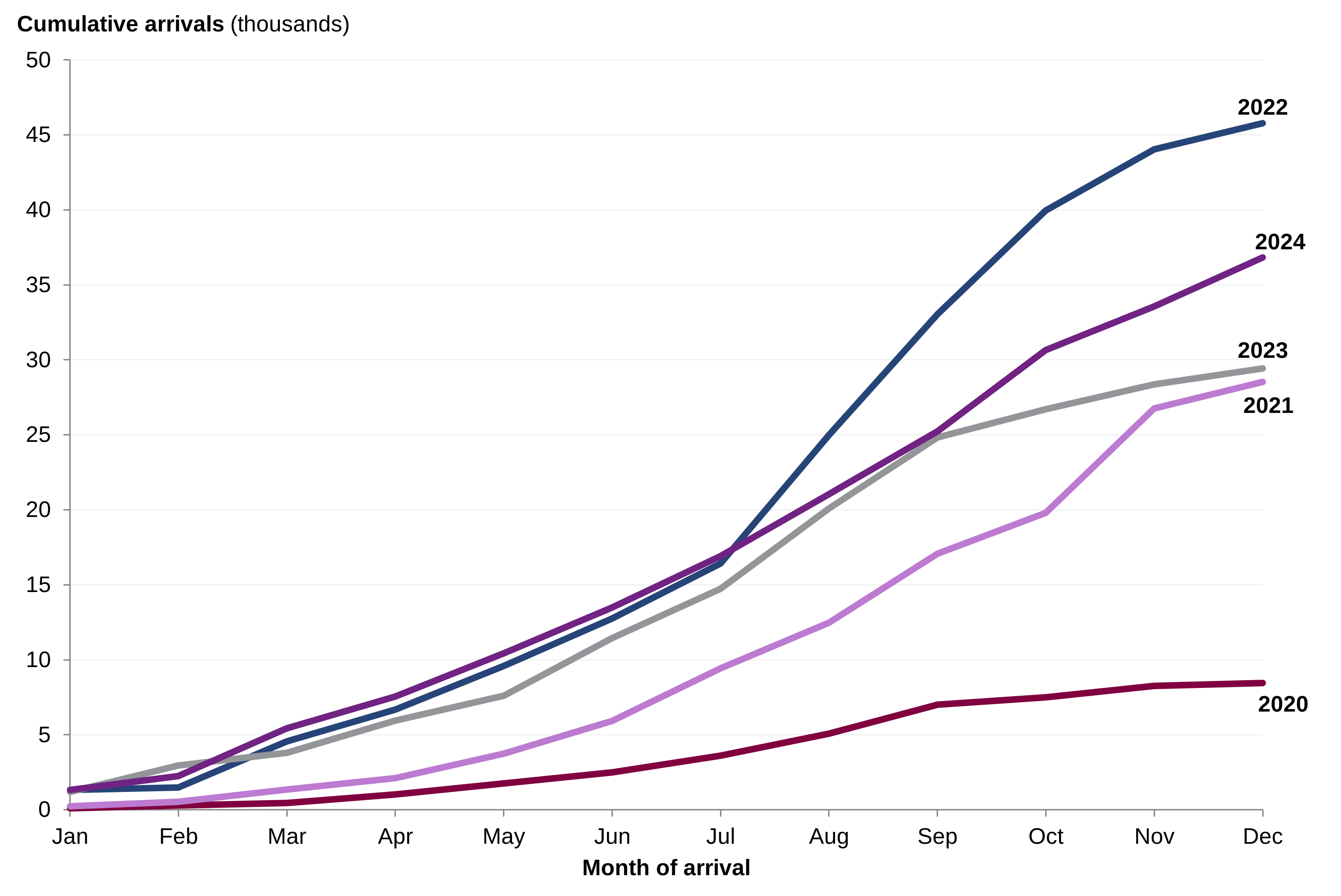
In 2024, 36,816 people arrived in the UK on small boats, 25% more than in 2023 (29,437).
Small boat arrivals were relatively low from 2018 to 2020, with 10,608 small boat arrivals across these 3 years. However, since 2021 there have been between 28,000 and 46,000 small boat arrivals each year, with the highest number of arrivals in 2022 (45,774).
Figure 2: Cumulative number of people arriving by small boats each month, January 2020 to December 2024
Source: Irregular migration to the UK summary tables, year ending December 2024 – Irr_02a
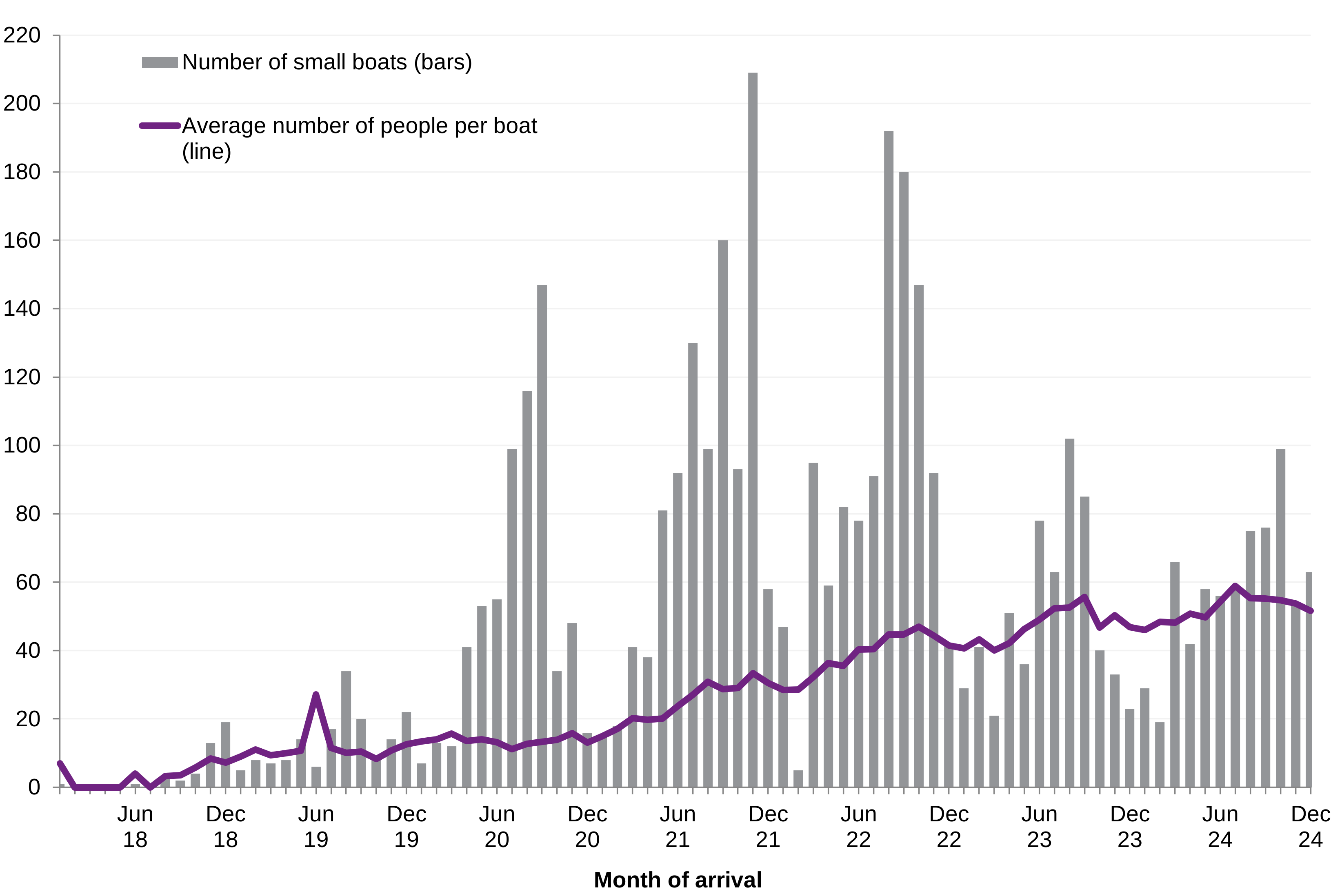
The average number of people per boat has increased in each year, rising to 53 people per boat in 2024 compared with 49 people per boat in 2023.
Figure 3: Number of small boats arriving and average number of people per boat, January 2018 to December 2024
Source: Irregular migration to the UK summary tables, year ending December 2024 – Irr_02a
In 2024, 695 small boats arrived in the UK without permission, one third (33%) fewer than in 2021. However, as the average number of people per boat has increased to 53, compared to 28 in 2021, the number of people arriving by small boat was 29% higher in 2024 compared to 2021.
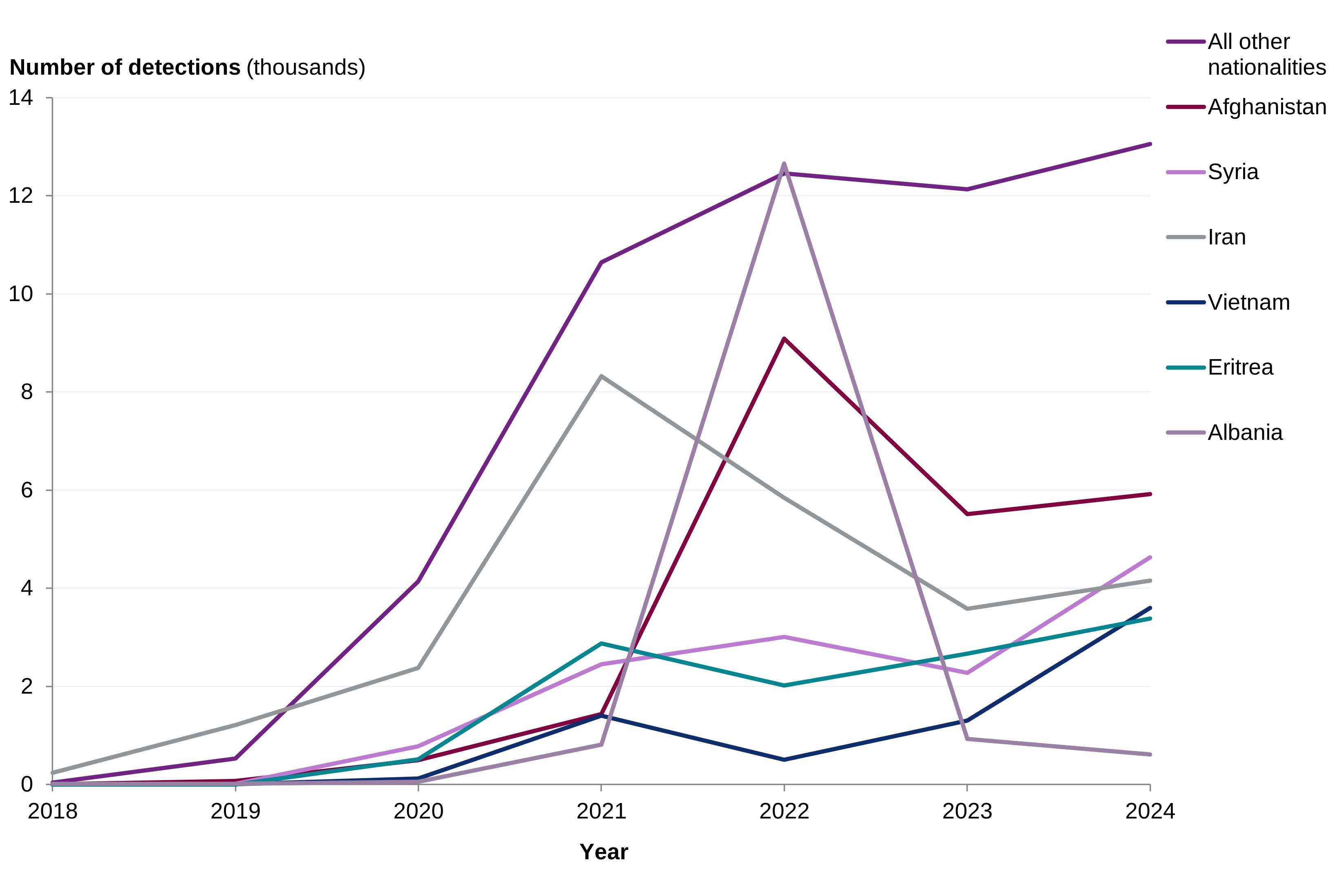
The top 5 nationalities arriving on small boats in 2024 accounted for 61% of all small boat arrivals. These nationalities were Afghan, Syrian, Iranian, Vietnamese, and Eritrean nationals.
Afghans were the top nationality arriving by small boat in 2024, with Afghan arrivals 7% higher in 2024 (5,919) compared to 2023. However, numbers remained lower than the peak of 9,088 Afghan arrivals in 2022 (Figure 4).
Albanians were the top nationality detected arriving by small boat in 2022, with 12,658 arrivals, but have declined to only 616 small boat arrivals in 2024. The substantial decrease in Albanian small boat arrivals since 2022 has in part been influenced by the collaboration between the UK and Albania and the signing of the agreement in December 2022 to deter and disrupt irregular migration and criminal networks.
Vietnamese nationals were the most common nationality detected arriving by small boat in the first half (January to June) of 2024, accounting for 17% of small boat arrivals in this period (2,248 arrivals). However, their numbers decreased in the second half of the year, only accounting for 6% of small boat arrivals in July to December 2024 (1,354 arrivals). In April 2024, the UK signed an agreement with Vietnam to increase cooperation on dealing with irregular migration and the government are continuing to work with Vietnam.
In contrast, Syrian nationals accounted for a higher proportion of small boat arrivals in the second half of the year, accounting for 14% of small boat arrivals from July to December 2024 (3,195 arrivals), compared to 11% of small boat arrivals from January to June 2024 (1,435 arrivals).
Figure 4: Top nationalities arriving on small boats, 2018 to 20241,2
Source: Irregular migration to the UK detailed dataset, year ending December 2024 – Irr_D01
Notes:
The vast majority of small boat arrivals claim asylum, but small boat arrivals only accounted for about one-third (32%) of the total number of people claiming asylum in the UK in 2024.
Since 2018, 95% of the people arriving on a small boat have claimed asylum. Of the 139,843 small boat arrivals claiming asylum since 2018, just over half (55% or 77,191) had received a substantive decision (as of 24 January 2025, when the data used in this release was taken). Of these, 51,600 had been granted asylum or some other protection status, and 25,591 were refused.
A further 18,962 people had their claims withdrawn before an initial decision (either by the claimant, or by the Home Office). Such claims are not included in grant rate calculations as they are not substantive decisions on the claim itself.
The number of small boat arrivals with an initial decision on their asylum claim will change as more individuals have their claims processed. Cases where the person claiming asylum arrived irregularly since 7 March 2023 previously fell under the criteria set out in the Illegal Migration Act, which meant they could not have their asylum claims considered. However, on 22 July 2024, the Home Secretary changed the law to remove the retrospective application of the Illegal Migration Act. Consequently, decision making on claims from individuals who arrived in the UK after 7 March 2023 has resumed.
Table 2: Small boat arrivals claiming asylum and initial decision outcomes on their claims, by arrival date, January 2018 to December 20241,2,3,4,5
| January 2018 to December 2024 (people) | January 2018 to December 2024 (cases) | |
|---|---|---|
| Small boat arrivals | 147,849 | Not applicable |
| Asylum claims | 139,843 | 126,332 |
| Awaiting a decision | 34,310 | 30,532 |
| Received an initial decision (% of claims) | 77,191 (55%) | 68,777 (54%) |
| of which: | ||
| granted refugee status or other leave (grant rate) | 51,600 | 46,764 (68%) |
| refused | 25,591 | 22,013 |
| Withdrawn | 18,962 | 18,246 |
| Received an administrative outcome | 9,380 | 8,777 |
Source: Irregular migration to the UK detailed dataset, year ending December 2024 – Irr_D02 and Irr_D03
Notes:
More detail on all asylum claims is available in the ‘How many people claim asylum in the UK?’ chapter and more detail on the outcomes of asylum claims is available in the ‘How many people are granted asylum in the UK?’ chapter of the Immigration system statistics quarterly release, including definitions on asylum case outcome types in the asylum and resettlement detailed datasets.
Modern slavery includes any form of human trafficking, slavery, servitude or forced labour. Potential victims of modern slavery in the UK are referred to the National Referral Mechanism (NRM). For more information on NRM referrals, see the ‘user guide’. For statistics on all modern slavery referrals (not just those relating to people arriving on small boats), see the ‘National Referral Mechanism statistics’.
Eleven per cent of small boat arrivals have been referred as potential victims of modern slavery.
Of the 147,849 small boat arrivals since 2018, 16,491 people were referred to the NRM.
The number of small boat arrivals in each year with NRM referrals may increase, as time will allow more people to identify as potential victims and be referred into the NRM.
Individuals referred to the NRM receive decisions on 2 grounds: reasonable grounds, and conclusive grounds.
A positive reasonable grounds decision means the decision-maker believes, based on all available general and specific evidence but falling short of conclusive proof, that a person may be a victim of modern slavery.
Following a positive reasonable grounds decision, a conclusive grounds decision will be made. A positive conclusive grounds decision indicates that, on the balance of probabilities, there is sufficient information to consider the individual is a victim of modern slavery.
In 2024, 70% of reasonable grounds decisions issued were negative.
This follows amendments made to the reasonable grounds test in January 2023. For more information see the ‘National Referral Mechanism statistics’.
Of the 4,480 conclusive grounds decisions issued since 2018, just over half (53%) were negative, meaning they were not deemed to be a victim of modern slavery.
Most small boat arrivals with NRM referrals have received a reasonable grounds decision. However, just under half of those who have received a positive reasonable grounds decision have not yet received a conclusive grounds decision, as conclusive grounds decisions take considerably longer (Table 3). More recent periods naturally have a higher proportion awaiting a conclusive grounds decision, as less time has passed for a decision to be made.
Table 3: Outcomes of small boat modern slavery referrals, by arrival date, January 2018 to December 20241,2,3,4,5
| January 2018 to December 2023 | 2024 | |
|---|---|---|
| Small boat arrivals | 112,460 | 35,389 |
| Arrivals with NRM referrals | 12,869 | 3,622 |
| Reasonable grounds (RG) decisions | 11,779 | 3,443 |
| Positive (%) | 7,068 (60%) | 1,045 (30%) |
| Negative (%) | 4,711 (40%) | 2,398 (70%) |
| Awaiting RG decision | 69 | 100 |
| Conclusive grounds (CG) decisions | 4,234 | 246 |
| Positive (%) | 1,975 (47%) | 120 (49%) |
| Negative (%) | 2,259 (53%) | 126 (51%) |
| Awaiting CG decision | 2,789 | 797 |
| Referrals withdrawn / closed | 1,050 | 79 |
| Awaiting reconsideration | 16 | 2 |
Source: Irregular migration to the UK detailed dataset, year ending December 2024 – Irr_D04 and Irr_D05
Notes:
Between 2018 and 2024, there have been 4,995 returns of people who arrived by small boat, 3% of all small boat arrivals during this time.
For further information on returns of small boat arrivals (and all returns from the UK), see the ‘How many people are returned from the UK?’ chapter of the Immigration system statistics quarterly release.
The Irregular Migration statistics were designated as ‘Official Statistics’ from February 2022. For more information, please see section 11.5 of the Immigration system statistics user guide.
The underlying casework systems on which this data is based are undergoing a process of change and therefore the published numbers may change in future quarters.
All statistics in this chapter relate to people who come to the UK irregularly. It includes those arriving on a small boat across the English Channel (a ‘small boat arrival’), along with some other groups arriving without prior lawful permission.
The statistics presented here relate to the number of people detected on, or shortly after, arrival to the UK through various irregular methods of entry. They do not include all those who enter the UK through irregular methods, nor the number of irregular migrants currently present in the UK. It is not possible to know the exact number of people currently resident in the UK without permission, nor the total number of people who enter the UK irregularly, and so we have not produced any official estimates for this number.
This is because:
Figures on detections may be affected by the levels of operational activity at the border and overseas, so should not be used to infer levels of irregular migration. Changes in detection could be a result of changes in operational activity as well as changes in the number of people attempting to enter the UK irregularly and recording practices.
Some people seek to enter the UK without valid permission but are prevented from reaching the UK border (for example, at the juxtaposed controls in France and Belgium, or further afield, if prevented from travelling). Prevented attempts are not reported in this chapter. Any counts of arrivals and attempted entries may relate to multiple arrivals or attempts by the same individual, and therefore will not relate to numbers of people.
For more information on the data in this chapter, please see the ‘user guide’.
Data referred to here can be found in the following tables:
Where are these people taken, you might ask – well, let me attach some informative videos, from various content providers:
The UK government does not publicly disclose the exact locations of hotels housing asylum seekers, which has led to concerns among local communities. However, some websites and initiatives have been created to track these hotels. For instance, HowFarFromMyStep.com provides information on the locations of hotels being used to house asylum seekers, allowing residents to find out if there is a nearby hotel being used for this purpose.23
As of the latest updates, the Home Office has been taking steps to reduce the use of hotels for housing asylum seekers. The government aims to stop using hotels as accommodation for asylum seekers as soon as possible, and has been working on alternative forms of accommodation.5
To track UK migrant hotels in England, you can use the following resources:
It is important to note that the Home Office policy is not to inform local residents about nearby hotels being filled with asylum seekers, and the information provided should not be used for any criminal purposes.23AI-generated answer. Please verify critical facts.
Migrants being housed in almost 400 hotels across UKhowfarfrommydoorstep.co.ukIs There A Migrant Hotel Near You?bbc.co.ukWhere are asylum seekers being housed in hotels in the UK? – BBC News
The UK government OFFICIALLY claims that the following ‘guidance’ was withdrawn as of November 2024…I will include current videos to prove that this is ongoing, as of April 2025:
Menu Search GOV.UK
Guidance
Updated 7 March 2024
This guidance is out of date and has been withdrawn.
Print this page
The Home Office has always been clear that use of hotels as temporary accommodation for asylum seekers was a short-term measure to ensure that we met our statutory obligation to accommodate asylum seekers who would otherwise be destitute during a period of unprecedented numbers of small boat arrivals.
That is why significant further steps have been taken to tackle illegal migration in line with the Prime Minister’s comprehensive ten-point plan to stop the boats. This includes elevating cooperation with France to unprecedented levels, striking tailored agreements with strategically important countries such as Albania, Belgium and Turkey, surging enforcement activity in the UK, and passing the landmark Illegal Migration Act. Small boat arrivals are now down by more than a fifth compared to last year, despite arrivals increasing by a third in Europe.
As a result of the range of measures we have implemented to stop the boats, reform the management of asylum accommodation estate and the delivery of alternative forms of accommodation sites, we have been able to stop the procurement of new asylum hotels and begin closing some hotels.
Residents currently accommodated in the hotels we will be exiting will be moving to other parts of our asylum estate. They will be notified a minimum of 5 days in advance and moved by the Home Office in line with our existing contractual requirements with our providers. We are providing additional resource to work with our accommodation providers and local partners to manage this process and minimise disruption, particularly on families.
As we exit hotels, we will continue to demand that local authorities deliver on their mandated commitments to their regional dispersal plans. Dispersal accommodation is cheaper to the taxpayer and more manageable for communities. We will also continue to deliver the ramp up of the Bibby Stockholm and our large sites as accommodation to ensure we can reduce reliance on hotel accommodation.
Asylum hotels were only ever a temporary measure in response to an unprecedented spike in small boat arrivals and the statutory requirement to accommodate asylum seekers who would otherwise be destitute. The government has always been clear that they are an inappropriate form of accommodation and that we must stop using them as soon as possible.
The Home Office recognises the strain that local authorities are facing at this time and the challenges that hotel accommodation brings. That is why we are making every effort to reduce hotel use and limit the burden on the taxpayer.
As a result of the range of measures we have put in place to stop the boats, reform the management of asylum accommodation estate and deliver alternative forms of accommodation sites, we are now able to stop the procurement of new asylum hotels and begin the second phase of hotel exits.
As we continue to deliver on our comprehensive ten-point plan to stop the illegal, dangerous and unnecessary small boat crossings we will be able to exit more asylum hotels.
We keep our accommodation estate under constant review and will close additional hotels whenever possible.
For the safety of asylum seekers and staff in the hotels the Home Office does not publicly comment on individual hotels.
We are committed to work with local authorities and statutory partners and have informed them of all hotel sites being vacated in their area, so they are aware of our plans.
Hotel closures will be phased on a monthly basis. Timings will be informed by operational requirements and contractual notice periods.
Phasing these hotel exits and providing notice in advance will enable hoteliers time to plan for their hotel being returned to its normal use by communities and businesses.
Hotels have been chosen based on a wide criteria: operational deliverability, taking into consideration cohorts and sizes, speed of potential exit, hotels notice period length; geographic factors, prioritising reductions in the most impacted locations, including rural areas. Hotel closures includes hotels across the UK.
We have taken decisive action to reduce the use of hotels and have no plans to contract new hotels for asylum accommodation. This does not include transitional accommodation, provided for safe and legal routes including under the (Afghan Relocations and Assistance Policy) ARAP and Afghan citizens resettlement scheme (ACRS) schemes.
As we continue to deliver on our comprehensive ten-point plan to stop the boats we will be able to exit more asylum hotels.
The programme of closures will be managed carefully to ensure all supported asylum seekers are provided with suitable alternative accommodation elsewhere in the estate.
Dispersal accommodation and large disused military sites are cheaper for the taxpayer and less impactful on the communities.
Asylum seekers will be required to leave the hotel and relocate to alternative Home Office accommodation. The hotel will no longer be available as asylum accommodation and asylum seekers will not be able to remain there.
All asylum accommodation is provided on a ‘no choice’ basis. Individuals will be moved suitable alternative accommodation, which may be in a different location from their current hotel.
Those whose personal circumstance necessitate accommodation in a particular location, will have their requests considered in accordance with existing published policies.
Our accommodation providers will notify asylum seekers as early as possible and will discuss the move with each individual and establish if there are any safeguarding, medical or other personal circumstances which need to be considered.
In accordance with contractual requirements asylum seekers will be provided with a minimum of 5 days notice before their relocation.
Room sharing is a long establish occurrence and all asylum seekers are informed that they may need to share when they first in asylum accommodation.
Where an asylum seeker is in a room on their own, and this room is suitable for more than one person, they will be asked to share a room with an individual of the same sex. Individuals may be asked to share a room where appropriate with family members, friends or individuals of the same sex.
Local authority chief executives and MPs will receive formal notification from the Home Office if an asylum hotel in their area is being exited along with a specific date by which it will have closed. Existing mechanisms remain in place as forums for engagement.
The Home Office’s accommodation providers will manage the moves of asylum seekers from one location to another.
Whilst we expect impacts on local authorities to be minimal, we are putting in place additional resource to work with our accommodation providers and local partners to manage this process and minimise disruption, particularly focusing on families.
As we exit hotels, we will continue to demand that local authorities deliver on their mandated commitments to their regional dispersal plans. Dispersal accommodation is cheaper to the taxpayer and more manageable for communities.
The government continues to honour our commitments to bring eligible Afghans to the UK, with new arrivals going directly into settled accommodation where possible. Where no settled accommodation is available, or other short-term accommodation, the MOD and DLUHC may, at some point, need to use hotels on a short-term temporary basis to accommodate new arrivals, as work to secure more settled accommodation continues.
As you read above – the government ‘officially’ has claimed that the using of ‘private’ hotels to house illegals has ended, but:

HERE IS A LEFT-WING PROPAGANDA VIDEO – trying to portray, so-called asylum-seekers…OMG!! FAKE NEWS/FALSE CLAIMS From 2016!! (How times have changed, eh)?!

